
Low-Energy Pet Routines for Busy or Overwhelming Days

Some days are quieter than others. Sometimes it’s because you planned them that way, however you may run into days where it’s due to your energy being limited.

On those days, it’s easy to wonder whether your pets are missing out or if you’re doing “enough”. The truth is, calm care doesn’t disappear when energy runs low; it just becomes simpler. This is why flexible schedules are essential.

Low-energy routines are about support, not discipline. They help maintain a familiar rhythm without asking more from you or your pets than the day can give. Remember you need to take care of yourself in order to take care of your pets and others.

What Low-Energy Routines Really Mean

Personally living with fibromyalgia has taught me that some days require a gentler pace and on those days, familiar routines matter even more for myself and my pets.

That might mean keeping the same order of the day, but shortening one part of it. Instead of going for a long walk I would do a shorter walk instead or do playtime in the yard.

For dogs and cats, knowing what usually happens next is often more comforting than extra activity. Familiar patterns help them relax, even when the day feels off or unusually quiet.

A Scaled-Down Daily Rhythm for Hard Days

Part of life is having busy or overwhelming days or moments that come up unexpectedly.

On those days, your usual routine can shrink without breaking.

Instead of following a full schedule, focus on order over intensity.

When I need to scale things down, my routine often looks like this:

  • Feeding
  • One calming activity — maybe a few minutes with a laser light for the cat and a Kong with treats for the dog
  • Rest or quiet time — they love cuddles, so this might be couch time together while I read or watch TV
  • A familiar evening cue — a simple bedtime treat to let them know it’s time to wind down

No clocks. No expectations. Just a recognizable flow your pets already understand.

One Small Routine Is Enough

Remember that one repeated action can anchor the entire day.

On my lower-energy days, keeping morning feeding consistent and offering a familiar treat before bed helps create a sense of stability. What matters most is choosing what works best for you and your pets.

Repeating something familiar from their usual routine even just once helps signal safety and predictability.

That might look like:

  • Feeding in the usual order
  • A short, familiar check-in
  • The same evening signal that marks bedtime

Doing one familiar thing often reduces stress more effectively than trying to do everything halfway.

Letting Routines Flex Without Breaking

Low-energy days are still part of the gentle daily rhythms shared in Gentle Pet Routines for Calm Days.

They aren’t interruptions they’re variations. When routines are built with flexibility in mind, they can support both calm days and harder ones without needing to be rebuilt.

Defining “”Enough”” on Hard Days

On low-energy days you must remember “enough” looks different, and that’s okay.

Calm care isn’t about completing the long routines everyday if you can’t or checking off every box. It’s about maintaining familiarity, even in small ways.

If your pet knows what usually comes next, you’re already giving them something steady to lean on.

What part of your routine feels easiest to keep on low-energy days?

If this felt helpful, you’re welcome to save or share it for later.

Why Gentle Daily Routines Help Dogs & Cats Feel Calm

Even on Quiet, Ordinary Days

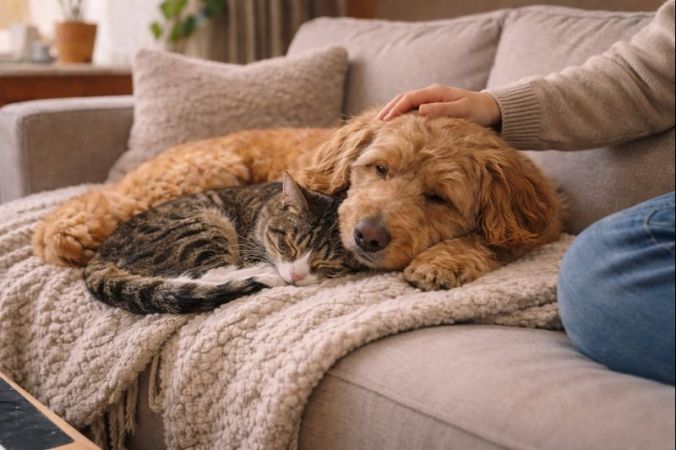
Dog and cat resting together on a cozy sofa during a calm evening at home

Calm days don’t always mean easy days, especially for pets. Dogs and cats rely on patterns to understand their world. When the flow of the day feels familiar, they’re more likely to relax into it. When that flow disappears, even quiet days can feel confusing.

These routines aren’t about doing more — they’re about helping the day unfold in a way your pets recognize.

Gentle daily routines help create a sense of “what comes next” for our pets, without strict schedules, pressure, or the need for perfection.

Pets Don’t Need Perfect Timing — They Need Predictability

Most pets don’t care if breakfast is at 7:00 or 7:30. However,

what matters is that breakfast usually comes after waking up, after a bathroom break, and before the day settles in.

That predictable order helps pets:

  • Anticipate transitions
  • Settle more easily between activities
  • Feel secure during slower or low-energy days

It’s not about watching the clock — it’s about keeping the sequence of the day familiar.

Gentle Routines Follow the Shape of the Day

Supportive routines for our pets and us are built around the natural rhythm of daily life:

  • Mornings gently start the day
  • Daytime allows for rest and light interaction
  • Evenings signal winding down

When those parts of the day happen in a similar flow, pets learn when to be alert and when it’s safe to relax.

Even small, repeated cues like the order of activities help reinforce that rhythm for our pets. This reinforcement for our pets allows us to have quieter or low-energy days when we need them.

Calm Days Still Need Clear Transitions

On quiet days, it’s easy to skip routines altogether. But pets often feel most unsettled when transitions disappear.

Without clear signals, some pets may:

  • Follow you from room to room
  • Seem restless or unsure
  • Struggle to settle into rest

Gentle routines help mark the day without overstimulation. They quietly say, “Nothing exciting is happening — and that’s okay.”

Routines Should Support You as Well

A gentle routine should feel manageable, not demanding, and never rooted in perfection.

You don’t need:

  • Rigid, inflexible schedules
  • Long checklists that feel endless
  • Constant activity that adds pressure

You do need:

  • A few repeatable patterns that help pets make connections
  • A consistent order of events so pets know what to expect
  • Flexibility when energy is low, without guilt

It’s essential for these routines to work for both pets and people. When they do, they’re easier to keep — and easier to return to when life feels

off.

Where This Fits Into Gentle Pet Routines for Calm Days

This post is part of the gentle daily rhythms shared in Gentle Pet Routines for Calm Days, where predictable flow helps pets feel secure, without adding pressure or rigid schedules.

A Gentle Place to End the Day

If calm feels hard to find lately, start by noticing what already repeats in your day. That familiar rhythm may be doing more for your pets than you realize.

What part of your routine feels easiest to keep right now?

There’s no need to overthink it or add pressure — just notice the natural flow of the day for you and your pets.

If this felt helpful, you’re welcome to save or share it for later.
Gentle Pet Routines for Calm Days: Simple Ways to Support Dogs & Cats at Home

Goldendoodle and cat resting together on a couch during a calm evening routine

Gentle Pet Routines for Calm Days: Simple Ways to Support Dogs & Cats at Home

Gentle Morning Routines for Calm Dogs and Cats

Life can often feel busy and overwhelming, and our pets often feel it too. When we have mornings, the day starts a little rushed; it’s easy to feel like we’re already behind beforewe’ve even had a chance to settle in.

I’ve noticed that even small, familiar routines can make a huge difference. Most of my mornings consist of my cat or dog following me from room to room. Sometimes, they don’t need much, just wanting to be nearby, while I’m getting ready. Occasionally, I have both of them as my shadow. Their simple presence is a reminder that calm doesn’t have to be complicated.

Our dogs and cats don’t need perfect days or constant stimulation as we may think. What helps them most and often us is predictability: gentle routines and small moments of connection. Having a simple morning routine can help pets feel more secure and help the rest of the day feel more manageable for us, too.

Low-Effort Enrichment Ideas That Support Calm Pet Routines

Adequate enrichment doesn’t always have to be loud, messy, or time-consuming. Gentle mental stimulation often works better than trying to pack too much into the day for dogs and cats, and for us as well.

Products like lick mats and puzzle feeders are easy ways to add gentle stimulation to the routine. They’re also simple to prep ahead of time. Some afternoons, that looks like setting out a lick mat and watching the house grow quieter, or noticing how a cat settles in at the window to watch birds for a while.

Over time I’ve realized that on busy days choosing one easy activity feels far more manageable than trying to do everything at once or doing nothing at all. Enrichment doesn’t need to be constant entertainment it’s about providing moments of engagement that fit naturally into real life.

I’ve found simple enrichment tools like lick mats helpful on busy days, and Chewy has a good selection if you’d like to see what’s worked well for my dog. https://www.chewy.com/pink-papyrus-silicone-slow-feeder-dog/dp/1597230

A Predictable Evening Routine to Help Pets Wind Down

Evenings feel calmer when they follow a familiar pattern. An evening routine will include their dinner, then possibly a short walk or play session, a calm activity, and then settling into a usual resting space. Keeping the order that things are done consistent helps signal when it’s time to slow down for the night. Remember these routines don’t need to be elaborate. Some evenings are quieter than others. I’ve noticed how much calmer the house feels when lights are dimmed and movements slow down a dog stretching out nearby, a cat choosing the same chair or blanket they always do. Those familiar patterns seem to signal that it’s okay to rest creating a sense of closure to the day for both pets and people alike.

Gentle Pet Routines on Low-Energy or Overwhelming Days

Sometimes, there will be days when a whole routine is not possible. Remember that’s okay, its better to adjust than overdo it or not do anything at all. When there are low-energy days, busy seasons, and moments of overwhelm remember that’s all apart of real life.

On those days, routines are meant to support you, not add pressure. Feeding at familiar times, offering one calming activity, or keeping bedtime cues consistent can still provide comfort and predictability.

Routines don’t have to be rigid and set in stone to be helpful. Flexibility is what allows them to adapt to your needs while still giving pets a sense of stability.

Starting Small With Gentle Pet Routines Is Enough

Creating calm at home doesn’t mean doing more it means doing what feels manageable. Even one small routine can make a difference for dogs, cats, and the people who care for them.

Start with what feels easiest, adjust as needed, and allow routines to grow naturally over time. Cozy home life looks different for everyone, and finding what works for you is what matters most not comparing yours to others. Remember this is meant to make your life a little more stress-free and help you be more present in your Cozy home, not to compete with others.

Author’s note:

I’m always adjusting our routines as life changes, learning to go with the flow. What works one season might need to look different the next, and that’s okay. Cozy home life is something I’m learning alongside my pets, one small routine at a time.

If you’d like to better understand why routines matter even on quiet, ordinary days, this post Why Gentle Daily Routines Help Dogs & Cats Feel Calm explains how predictable daily flow helps dogs and cats feel calm without rigid schedules.

If this felt helpful, you’re welcome to save or share it for later.